Understanding Inner and Outer Ball Cage Constant Velocity Joints
I. What is a Ball Cage Constant Velocity Joint (CV Joint)?
A ball cage constant velocity joint (CV Joint) is a key component in automotive transmission systems. Its main function is to achieve smooth and constant speed transmission of power under different angles and steering conditions, ensuring the vehicle runs stably even during sharp turns or uneven road travel.
Its core structure includes:
- Outer Race
- Inner Race
- Balls
- Cage
Compared to traditional cross-type universal joints, CV Joints avoid speed fluctuations and are therefore widely used in front-wheel drive vehicles, four-wheel drive vehicles, and independent suspension systems, effectively improving driving comfort and transmission efficiency.
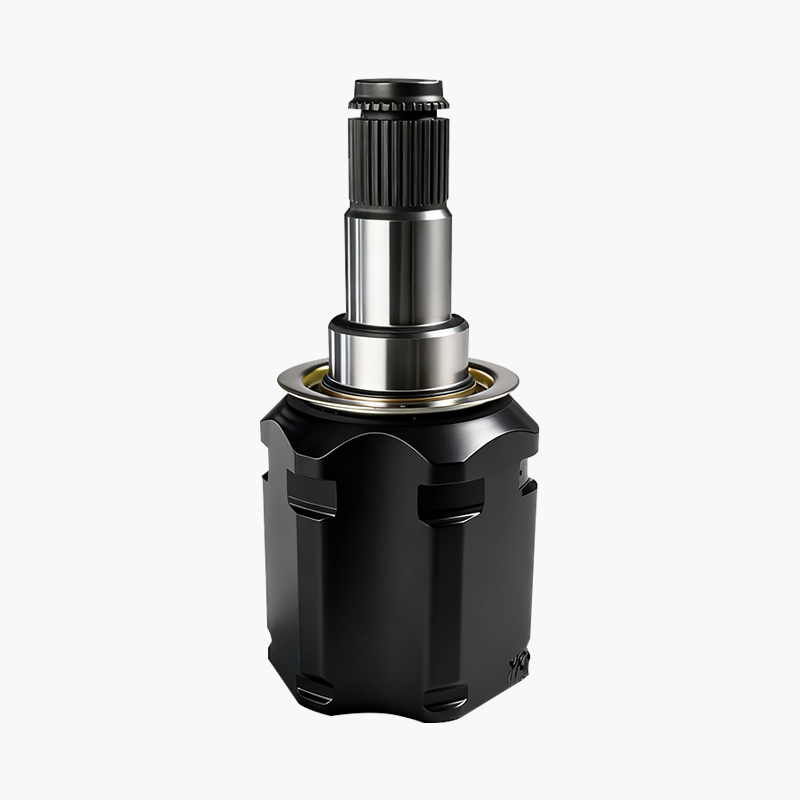
II. Inner Ball Cage Type Constant Velocity Universal Joint
1. Structural Features
- Inner ball cage type constant velocity universal joints typically employ:
- Inner sliding structure design
- Allows axial expansion (plunging function) to adapt to dynamic changes of the vehicle
- Steel balls slide in the groove to adapt to length changes during suspension movement
2. Core Functions
- Compensates for axle length changes caused by suspension vertical movement when the vehicle passes through potholes or bumps
- Ensures continuous and stable power output to the wheels
- Reduces transmission system vibration, enhancing driving smoothness
3. Technical Advantages
- Excellent expansion capability to meet various working conditions
- Smooth operation and low noise, bringing a better driving experience
- Suitable for complex road conditions (such as off-road and agricultural equipment) due to its strong adaptability
4. Typical Applications
- Transmission output end (inner side)
- Inner driveshaft of front-wheel drive vehicles
- The transmission system of construction machinery that requires frequent length compensation
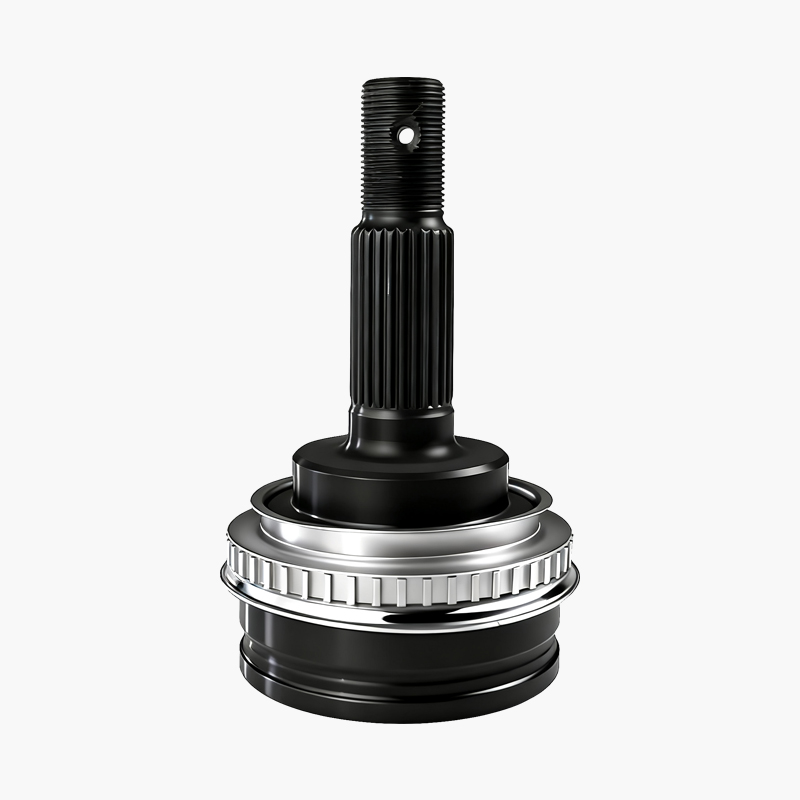
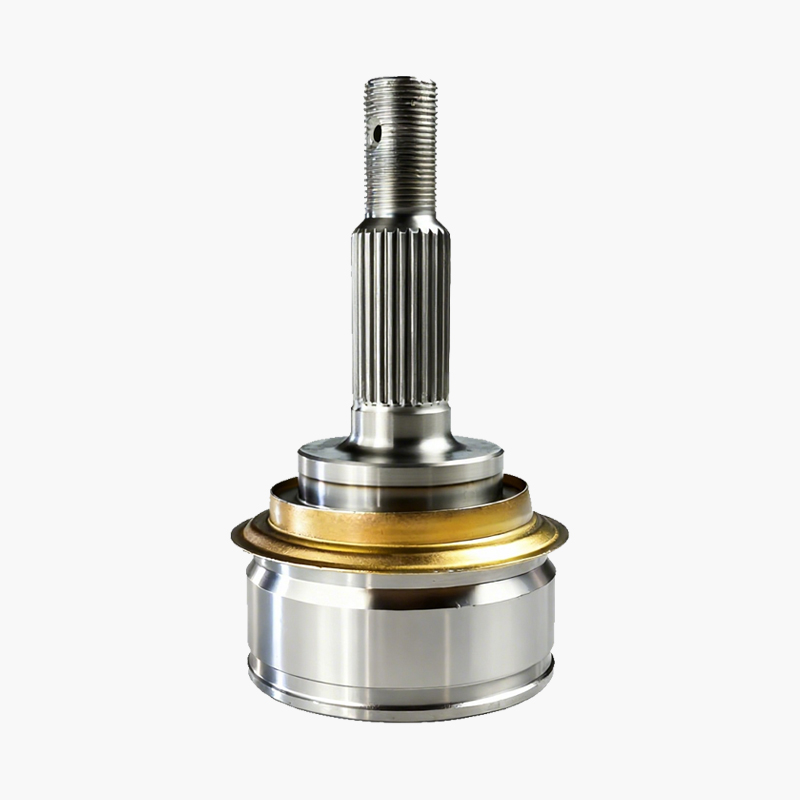
III. External Ball Cage Type Constant Velocity Universal Joint
1. Structural Features
- External ball cage-type constant velocity universal joints typically employ:
- Fixed structure Type)
- Large turning angle capability (typically over 45°), meeting the needs of vehicle steering
- Precision groove design to ensure ball positioning and stable transmission
2. Core Functions
- Adapt to large-angle changes during vehicle steering, ensuring flexible turning
- Achieve stable angle transmission without speed loss
- Maintain constant speed output even at maximum steering angle
3. Technical Advantages
- High turning angle capability, suitable for steering wheels of various vehicle models
- Strong load capacity, able to bear large torque during driving
- High rotational accuracy, reducing wear and extending service life
4. Typical Applications
- Wheel end (outer side)
- Front-wheel drive vehicle steering drive system
- SUVs and high-performance models that require flexible steering and high load-bearing capacity
IV. Core Differences Between Inner CV Joint and Outer CV Joint
- ItemInner CV JointOuter CV Joint
- Function Axial extension (Plunging)Fixed transmission (Fixed)
- Installation position: Near the gearbox, Near the wheel
- Tuning angle capability SmallerLarger
- Structural complexityMediumHigher
- Application focus: Compensating for length changes, Adapting to steering angle
V. Industry Development Trends
1. Material Upgrades
- High-strength alloy steel (e.g., 20CrMnTi) is widely used to enhance the joint’s strength and durability
- Surface heat treatment (carburizing and quenching) improves wear resistance and fatigue life
2. Precision Manufacturing
- CNC precision machining of grooves ensures high dimensional accuracy and smooth ball movement
- Automated assembly improves consistency and reduces manual errors
3. Sealing and Lubrication Optimization
- High-performance rubber dust boots (Boot) prevent dust and moisture from entering, protecting internal components
- Long-life grease (Grease) ensures stable lubrication and reduces maintenance frequency
4. New Energy Vehicle Adaptation
- With the development of electric vehicles, higher requirements are placed on CV Joints:
- Lower noise (NVH optimization) to meet the quiet demand of electric vehicles
- Higher speed adaptability to match the high rotational speed of electric vehicle motors
- Lighter design to reduce vehicle weight and improve energy efficiency
Both the Inner Ball Cage Type Constant Velocity Universal Joint and the External Ball Cage Constant Velocity Universal Joint are essential components in modern vehicle drivetrains. Understanding their differences and applications helps ensure proper selection and long-term reliability, which is crucial for vehicle safety and performance.
For automotive parts distributors and manufacturers, choosing high-quality CV joints that meet industry standards is key to meeting market demand and maintaining consistent product performance, thereby gaining competitive advantages in the industry.

 English
 русский
 Español
 Português
 عربى
عربى